
A $1.5 Trillion Shield: Trump's Bold Call for Defense Spending in Turbulent Times
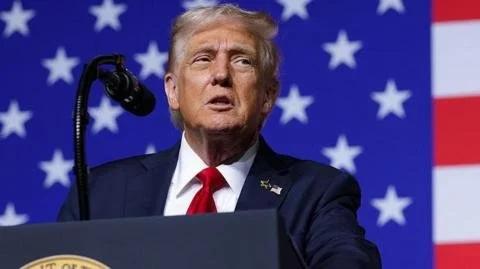
President Donald Trump has made a striking call to substantially increase US defense spending to $1.5 trillion (£1.1 trillion) by 2027, marking over a 50% rise from this year’s approved budget of $901 billion. In his message, Trump emphasized the need for a “Dream Military” to ensure the nation’s safety and security in what he described as “troubled and dangerous times.”
The proposed budget is seen as a response to rising geopolitical tensions and aims to bolster military preparedness. Trump vowed to clamp down on the excessive payouts to executives and shareholders of major US defense contractors, including Lockheed Martin, Northrop Grumman, and Raytheon, unless these companies accelerate the delivery of essential armaments and enhance their manufacturing capabilities.
In the wake of Trump’s announcement, shares of major defense equipment makers surged by more than 5% in New York trading, showcasing investor optimism regarding increased military spending. However, economists have previously warned that the widening gap between US spending and income is becoming unsustainable.
Trump believes that the government can comfortably achieve the proposed budget through revenues generated by tariffs. He has been advocating for heightened defense spending since his first term, suggesting that slow production rates of military equipment are unacceptable.
In particular, Trump criticized the “exorbitant” salaries of defense executives, urging that no CEO should earn over $5 million, a fraction of what many currently make. He pointed out Raytheon as the least responsive among defense contractors, threatening that without significant investment in new plants and equipment, they may risk losing business with the Department of War.
The backdrop of Trump’s defense spending proposal includes escalating tensions, such as the recent capture of a Russian-flagged oil tanker by US forces and military provocations from China around Taiwan. As these global dynamics shift, the future of US military readiness remains a central theme in discussions of national security.