
A High-Stakes Bet: The US Dollar Dance with Argentina's Peso
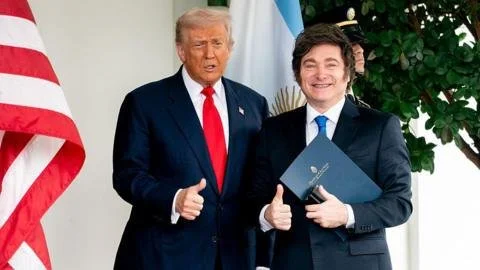
US Treasury Secretary Scott Bessent has declared a major victory with his high-risk investment in Argentina’s struggling currency, the peso. He announced that the US has successfully repaid its investments and no longer holds any pesos in its exchange stabilization fund. This venture, initiated last year in order to stabilize the declining peso and support the political party of President Javier Milei, came under scrutiny from Democrats who accused Bessent of jeopardizing taxpayer money in a nation notorious for financial instability.
Despite the criticism, Bessent hailed the move as an ”America First homerun deal,” emphasizing the dual benefits of strengthening ties with a key ally while generating tens of millions in profit for American taxpayers. The intervention in September aimed to counteract market panic, as the peso faced drastic sell-offs correlating with Milei’s party’s election prospects. Bessent assured the public of his commitment to stabilizing the currency and soon disclosed that the US had purchased pesos and established a swap line allowing Argentina to trade pesos for dollars.
This intervention halted the peso’s decline, especially following Milei’s party’s landslide victory in the mid-term elections. By December, Argentina’s central bank completed the conditions of the swap line, with the transaction amounting to only $2.5 billion in pesos exchanged for dollars, out of a potential $20 billion. Additionally, the US provided an extra $872 million in support related to IMF reserves.
While Bessent’s administration views this as a straightforward success, financial experts, like Brad Setser from the Council on Foreign Relations, caution that the long-term viability of Argentina’s economy remains uncertain. He points out that despite Bessent’s recovery of funds, there’s a worry that Argentina may be unduly reliant on US support without taking the necessary steps to rebuild its own reserves. Ultimately, while the US intervention has yielded short-term success in currency stabilization, significant challenges persist for Argentina’s economic future.