
**Courtroom Drama Unfolds: Trump's Controversial Move to Fire Fed Governor Lisa Cook Under Scrutiny**
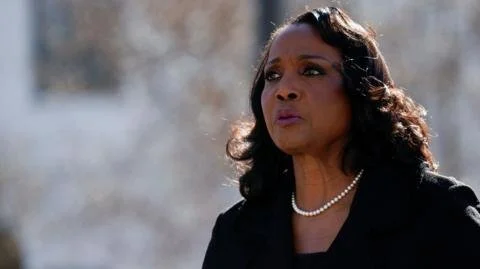
Tension Mounts in Supreme Court Over Trump’s Firing of Fed Governor
U.S. President Donald Trump’s unexpected decision to fire Federal Reserve governor Lisa Cook is facing intense skepticism from the Supreme Court, marking a significant moment in the ongoing debate about central bank independence and presidential power. During Wednesday’s hearing, justices from both ends of the ideological spectrum raised serious concerns about the implications of such a hasty decision on the integrity of the Fed and the wider economy.
In August, Trump claimed Cook’s firing was due to allegations of her engaging in mortgage fraud, which Cook vehemently denies. Advocates for Cook argue that Trump’s actions are a pretext to gain greater control over the Federal Reserve, jeopardizing the institution’s intended autonomy. Justice Brett Kavanaugh, a conservative appointee of Trump, expressed reservations about the administration’s rationale, questioning the rush to judgment and warning that it could diminish the Fed’s independence.
Under existing law, governors like Cook may only be removed “for cause”, a stipulation designed to shield the Federal Reserve from political influence. The Trump administration contends they have sufficient grounds, pointing to alleged inconsistencies in Cook’s mortgage applications that could undermine public confidence in the bank. However, Cook’s legal representation asserts that these claims are based on incomplete information and that no fraud occurred.
In presenting her case, attorney Paul Clement emphasized the necessity for due process and the dangers of allowing the president unmitigated power to determine what constitutes ‘cause’ for dismissal, fearing it would render the protective measures ineffective. Justices articulated concerns that bypassing a thorough review could erode the central bank’s independence, which is crucial for maintaining economic stability and integrity.
The stakes are notably high, with Trump advocating for a lower interest rate policy to stimulate economic growth, juxtaposed against Cook’s portrayal of her position as one dedicated to evidence-based decision-making free from political influence. Following the hearing, Cook reiterated the case’s significance in preserving the Federal Reserve’s autonomy, stating, “This case is about ensuring that key interest rates are determined by independent judgment rather than political pressure.”
As deliberations continue, several justices expressed hesitance regarding the rushed nature of the case. Notable questions arose about the need for a comprehensive review of Cook’s situation before a final decision could be made, indicating a cautious approach may be warranted. This hearing signifies a pivotal moment in the interplay between politics and economic governance, with observers closely monitoring the Supreme Court’s future rulings on this contentious issue.