
From Waste to Wonder: How Robots are Revolutionizing the Staffing Crisis in Waste Management
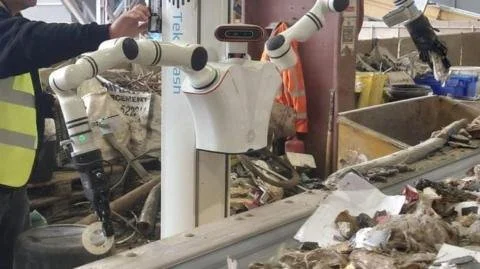
As the waste management industry grapples with a severe staffing crisis exacerbated by the COVID-19 pandemic, companies are turning to robots as a solution. With hiring challenges leading to operational delays and increased costs, firms are integrating advanced robotic technology into their processes to maintain productivity. These automated systems are not only enhancing efficiency but also addressing the shortage of workers who are often deterred by the challenging nature of waste collection and processing jobs.
In an effort to cope with rising workloads, companies are deploying artificial intelligence solutions that can sort recyclable materials faster and more accurately than human workers. This technological shift is proving to be a game-changer, allowing businesses to keep pace with the growing volume of waste while reducing reliance on human labor. Additionally, these robots are designed to operate in hazardous conditions, thereby minimizing risks associated with frontline waste management tasks.
Industry experts suggest that while robots can alleviate some operational pressures, they do not completely replace the need for human workers. Instead, they augment the workforce, allowing human employees to focus on more complex tasks that require human judgment and expertise. However, as businesses embrace automation, discussions surrounding the future of work in this sector are becoming increasingly prominent. The move towards integrating robots into waste management operations raises questions about job displacement and the potential for new job creation in technology maintenance and robot oversight.
Overall, this migration towards robotic solutions represents a significant transformation within the waste management industry, highlighting the need for continuous adaptation in the face of ongoing labor challenges.