
Powell vs. Trump: The High-Stakes Battle for Federal Reserve Independence
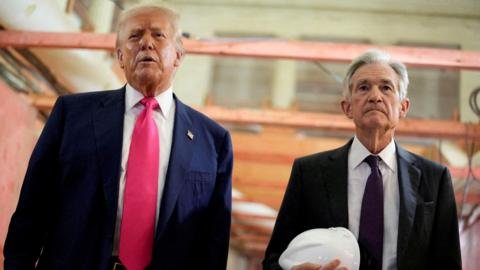
In an unprecedented moment, Federal Reserve Chair Jerome Powell took to social media for an unscheduled video statement, which raised eyebrows and prompted questions about its authenticity. This unusual occurrence stems from a long-standing rivalry between President Trump and Powell, intricately linked to the conflicts over U.S. interest rates and the independence of the Federal Reserve.
Powell’s announcement came as the Department of Justice served indictments related to alleged misconduct concerning a renovation project at the Fed. However, Powell’s statement quickly pivoted to emphasize that these indictments were indicative of a broader political pressure aimed at manipulating interest rate decisions—a direct challenge to the independence that the Federal Reserve has long maintained. He asserted that the push for political control over monetary policy risks undermining the integrity of the Federal Reserve, drawing parallels to emerging markets where central bankers have faced similar threats from governing powers.
Powell explicitly warned that these actions should be viewed as an alarming attempt to intimidate the Fed, stating, “This is about whether the Fed will be able to continue to set interest rates based on evidence and economic conditions…or whether instead, monetary policy will be directed by political pressure.” The implications of this struggle extend beyond national borders, as the stability of global markets is intricately linked to the Fed’s autonomy.
As Powell’s term is set to expire in May, the potential for a Trump-appointed successor looms large, raising the stakes even higher. Moreover, speculation abounds that the administration may explore weaponizing the Fed’s financial tools amid ongoing tariff disputes, straying further into a politically charged territory.
The tension heightened by Powell’s intervention also resonates within the broader context of recent U.S. governance, which includes manipulations around immigration and Supreme Court rulings on economic policies. Powell’s actions might provoke significant reactions in the market—much like previous interventions by central bank heads have influenced sentiment during crises. In a landscape where the Federal Reserve is viewed as a counterbalance to political power, the fallout from this confrontation is poised to be consequential for both American and global financial landscapes.