
Revolutionizing the Assembly Line: Hyundai's Bold Leap into Humanoid Robotics
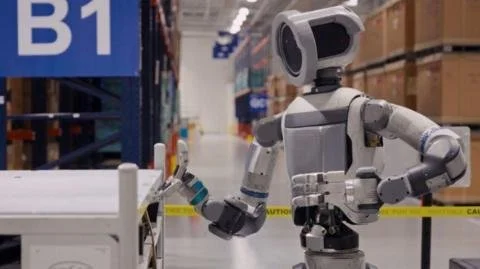
Hyundai Motor Group is set to transform its production facilities by introducing humanoid robots starting in 2028. This bold move highlights the race among major corporations to adopt cutting-edge technology in manufacturing. At the recent Consumer Electronics Show (CES) in Las Vegas, Hyundai showcased its latest innovation, Atlas, a humanoid robot developed in partnership with Boston Dynamics.
Hyundai plans to deploy Atlas across its global operations—including its plant in Georgia, which gained notoriety due to a large immigration raid in 2025. The integration of these humanoid robots intends to alleviate physical strain on human workers, tackle unsafe tasks, and ultimately expand the utilization of robotics in their factories. The company has yet to clarify the financial aspects or the initial number of Atlas robots to be deployed.
In addressing concerns over job displacement, Hyundai’s vice chair, Jaehoon Chang, assured stakeholders that while robots will take on various functions, there will still be a need for human employees to train the robots and oversee their operations. This commitment comes amid Hyundai’s significant investment of over $20 billion into US manufacturing and technology, reinforcing the company’s alignment with the previous administration’s goals to enhance domestic manufacturing.
The announcement coincides with growing interest in automation, with competitors like Tesla and BYD also planning to integrate humanoid robotics into their workflows. Hyundai’s battery facility in Georgia, co-operated with LG, is pivotal, especially following the challenging immigration issues it faced. The response from both South Korean officials and Hyundai’s executives indicates a focus on maintaining foreign investment in the US by ensuring a more stable labor environment.
As the robotics landscape evolves, Hyundai is at the forefront of merging artificial intelligence with manufacturing, promising not just a shift in production dynamics, but a re-envisioning of the future workforce.