
Tariffs: The Unseen Force Shaping the Global Economy for 2026 and Beyond
President Trump’s administration continues to emphasize tariffs as a key tool for economic strategy, heralding their role in enhancing jobs, wages, and overall economic growth in the U.S. However, this perspective remains hotly contested. The International Monetary Fund (IMF) has revised its projections, expecting global economic growth to slow to 3.1% in 2026, down from previous forecasts of 3.3%. According to IMF chief Kristalina Georgieva, the growth rate is now below pre-Covid levels, which averaged around 3.7%.
Economists like Maurice Obstfeld of the Peterson Institute acknowledge that while tariffs have created significant uncertainty and inflationary pressures, their worst impacts were mitigated by a lack of strong retaliation from other nations. He notes that the minimal response from most countries prevented a full-blown trade disaster, though the reality remains that the U.S. has maintained a plethora of tariffs and trade restrictions since Trump’s second term.
The tariffs have escalated business costs and led to planning challenges, although some damage has been cushioned by lower interest rates and the decreasing value of the dollar. Moreover, exemptions within the tariffs can both lower effective duties and complicate trade discussions, leading to uncertainties for businesses seeking compliance.
Despite mixed signals within the global economy, growth indicators in the U.S. showed some resilience, with a reported 4.3% expansion in the latter half of the year. However, economists warn that we might not have witnessed the full economic impacts of the tariffs yet, as inflation pressure continues to mount, particularly in regions like the U.K. and the eurozone.
The geopolitical landscape plays a crucial role in the future of global trade, with important negotiations ongoing involving the US Mexico Canada Agreement (USMCA) and renewed tariffs discussions. Additionally, external factors like oil prices and shipping logistics through vital routes like the Red Sea are also under scrutiny as they may influence global economic dynamics in 2026.
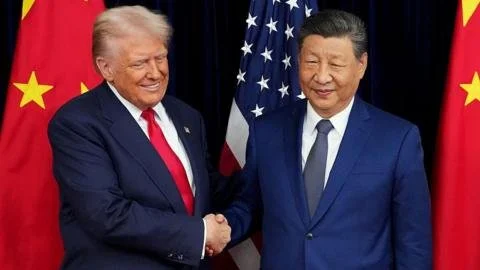
Looking ahead, the anticipated meeting between Trump and Chinese President Xi Jinping could be pivotal, as it will address substantial issues including tariffs, sourcing of rare earth metals, and technological access, all while concerns about manufacturing practices linger in the background. James Zimmerman, chair of the American Chamber of Commerce in China, underscores the necessity of continued dialogue despite low expectations for progress. Overall, the current climate indicates that tariffs will remain a significant and contentious factor in driving global economic conversations into 2026.