
The Tariff Showdown: Trump's Trade Policies Face Supreme Court Reckoning
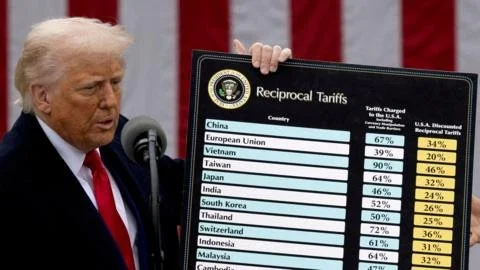
The US Supreme Court is set to hear pivotal arguments regarding the legality of Donald Trump’s tariffs, a key pillar of his administration’s trade war. The case comes as several small businesses and states contest the administration’s use of tariffs, claiming they violate constitutional law and should be dismantled. A ruling against Trump could overturn his aggressive tariff strategy, forcing the government to refund billions collected from these taxes on imports, potentially disrupting his trade agenda and weakening his position in negotiations.
Trump has fervently warned that a loss in court would compromise national security and hinder his trade powers, emphasizing that the situation is monumental for the US. The tariffs in question, which have reportedly burdened retailers like Learning Resources, amount to significant financial challenges. For example, Learning Resources anticipates a staggering $14 million in costs due to these tariffs, approximately seven times the total tariff expenditure from the previous year, highlighting the immediate impact on businesses.
This legal battle is particularly critical as the Supreme Court determines how far presidential powers extend. The administration has enforced tariffs under the 1977 International Emergency Economic Powers Act (IEEPA), bypassing conventional legislative procedures, a move contested by opponents who argue that such taxation authority lies solely with Congress. Critics, including bipartisan group members of Congress, have filed legal briefs asserting that the president’s claims of national emergency due to the trade deficit do not justify the imposition of tariffs.
The implications of the Supreme Court’s decision are monumental, potentially affecting over $90 billion in tax revenue already generated from tariffs this year, with estimates suggesting this amount could escalate to $1 trillion pending the court’s timeline. In anticipation of a ruling, businesses are bracing for possible refunds, although the fallout from tariffs has already strained many companies’ operations significantly.
With the court expected to deliberate and provide an opinion by January, the outcome holds profound consequences not only for Trump’s trade policies but also for international relations, affecting critical trade agreements like that with the European Union and businesses globally, such as Swiss chocolate manufacturers adversely impacted by US tariffs. The economic strain felt by these organizations underscores the deep-seated ramifications of unilateral trade decisions in the current legal and political climate.