
Trump's Greenland Grasp: Tariff Threats Ignite International Backlash
In a bold and controversial move, US President Donald Trump announced a 10% tariff on goods from eight allied nations—Denmark, Norway, Sweden, France, Germany, the UK, the Netherlands, and Finland—over their opposition to his proposed purchase of Greenland. This announcement came with the warning that the tariff could rise to 25% by June and remain until a deal for Greenland’s acquisition is reached. The response from European leaders was swift and fierce, with UK Prime Minister Keir Starmer calling the tariffs “completely wrong” while French President Emmanuel Macron labeled them “unacceptable.”
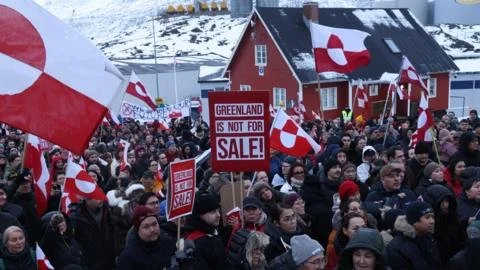
Thousands in Greenland and Denmark protested against Trump’s takeover ambitions, holding signs reading ”Greenland is not for sale” and demanding respect for their right to self-determination. They rallied alongside their leaders, whose countries have sent troops to the region, emphasizing that the security of the Arctic should be a joint NATO responsibility.
The European Union convened an emergency meeting amid concerns over the implications of Trump’s tariffs, with officials warning that they risk undermining transatlantic relations. In response, EU foreign policy chief Kaja Kallas highlighted how Trump’s actions could benefit nations like China and Russia, who thrive on divisions among allies.
Trump’s tariff threats and aggressive tactics have been criticized not just by European leaders, but also domestically. House Foreign Affairs Committee Democrat Gregory Meeks planned to propose a resolution to terminate what he called ”illegal and absurd tariffs.” Meanwhile, Trump’s frequent mention of tariffs as a blunt coercive tool to align nations with US interests has only escalated tensions.
Despite the threats, polls indicate that 85% of Greenlanders oppose joining the US, and protests reflect a clear desire for independence and respect for their governance. As Europe responds cohesively against what they see as Trump’s imperialistic agenda, the geopolitical landscape surrounding Greenland continues to shift dramatically.