
Budget Controversy: Did Rachel Reeves Mislead the Public on Finances?
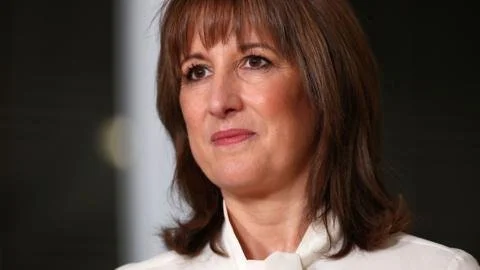
Downing Street has firmly rejected claims that Rachel Reeves, the Chancellor, misled the public regarding the UK’s public finances prior to the Budget announcement. As the Budget approached, Reeves often highlighted a concerning downgrade in the UK’s economic productivity, leading some to interpret her remarks as signifying challenges in adhering to her fiscal rules. However, a significant letter from Richard Hughes, the chairman of the Office for Budget Responsibility (OBR), disclosed that higher wage forecasts could actually assist Reeves in adhering to her budgetary guidelines.
The Conservative Party leveled accusations against Reeves, branding her statements as a deliberate attempt to create a gloomy outlook for the economy as a ploy to justify tax increases. Kemi Badenoch, the Tory leader, asserted that Reeves had effectively ‘lied’ to the public and advocated for her dismissal. Notably, Hughes indicated in his letter that, contrary to Reeves’ pessimistic assessments, the economy was in a more favorable position than presumed, confirming on October 31 that the Treasury was on track to fulfill its primary rule of not borrowing for daily expenditure.
Further complicating the narrative, on November 4, Reeves cautioned about the weaker productivity, suggesting repercussions for public finances and tax revenues. In subsequent statements, she hinted at the likelihood of raising income tax rates, although her final Budget did not include an increase in those rates but did propose £26 billion in tax hikes, primarily through the freezing of income tax thresholds over the next three years.
Reeves justified her decisions, emphasizing the need to maintain spending without drastically slashing public services or breaking manifesto commitments, while Conservative figures, such as Sir Mel Stride, criticized her for neglecting to mention the potential offset of higher wages on the fiscal predictions. Despite the accusations and the turbulent political backdrop, the Prime Minister’s spokesperson downplayed claims of public deception, affirming that the government’s strategies were clearly articulated and aimed at providing stability for businesses.
As the political landscape grows more contentious with these financial revelations, the ongoing debate over fiscal treatment and economic projections continues to shape the narrative leading up to the Budget.