
Elections on Hold: Why Nearly Half of England's Councils Are Seeking Delays
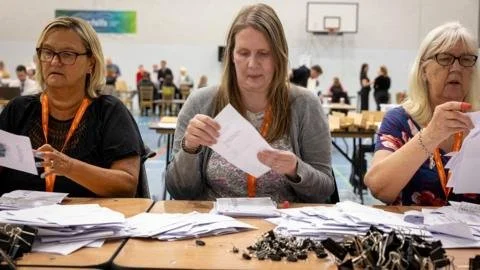
Just under half of eligible councils in England have requested a postponement of their elections scheduled for this May, affecting millions of voters amid a significant overhaul of local government structures. The government has received requests from 28 councils, primarily Labour-led, seeking to delay voting to facilitate the transition to new unitary councils that will eventually replace the current two-tier system of district and county councils. This restructuring aims to simplify local governance but has sparked political controversy.
Opposition parties, especially the Conservatives and Liberal Democrats, accuse Labour of fearing voter backlash, claiming the delay undermines democratic integrity. They argue that allowing councillors to serve longer terms without a democratic mandate is not acceptable. Reform UK is also taking legal action against the Ministry of Housing, Communities and Local Government, aiming to block changes to election dates, asserting that councils awaiting reorganization could still hold elections.
Local Government Secretary Steve Reed defends the delay, stating that running elections for potentially short-lived councils would be wasteful and draw resources away from essential services. However, dissent is voiced at various councils, with protests erupting and police called to meetings where delays were discussed. Notably, the Conservative leaders of West Sussex, East Sussex, and Liberal Democrat Cheltenham are among those requesting delays despite their parties’ official stances, highlighting the complexity of the situation.
As councils weigh their options, the political landscape remains tense, with calls for laws that would limit the government’s power to postpone elections without strong justification. The full list of councils requesting postponement includes various regions, demonstrating widespread concern regarding the impending structural changes.
In summary, nearly half of England’s councils are pushing for election delays amid a contentious restructuring of local governance, sparking significant political debates about democracy and voter representation.