
From Allies to Afterthoughts: How America's New Era Threatens the Rule of Law Globally
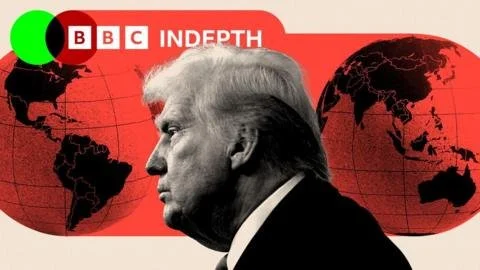
In a poignant reflection on America’s role in shaping the post-WW2 international order, the author revisits a keynote speech delivered in 2002, shortly after the 9/11 attacks, highlighting the complex relationship between the United States and the Global South. The narrative begins with a recollection of how American power helped usher in a new era of peace and prosperity in Europe post-war, thanks to initiatives like the Marshall Plan. The author shares a powerful moment with a Pakistani student who compared the American experience to living within the Imperial walls of Rome, acknowledging a stark contrast in perspectives on American power between insiders and outsiders.
The article then draws attention to the evolving global dynamics under President Donald Trump, whose proclamations, particularly regarding Greenland, expose a growing disregard for traditional alliances and the rules-based order established after WWII. The Trump administration’s unilateralism, encapsulated in its America First mantra, threatens to reshape international relations and lead to a world where might trumps rules. This strategy risks isolating middle powers such as Canada and European nations, complicating their positions in a new geopolitical landscape where stronger nations dictate terms.
The author reflects on the historical pattern of American interventions in Latin America, detailing past actions like the 1953 coup in Iran and the 1973 Chilean coup. These interventions, largely justified under the Monroe Doctrine, illustrate a precedent for American power exerting influence without regard for established international laws. The discussion reveals how the landscape for middle powers may change dramatically as they face potential marginalization within this new framework—emphasized by Canadian Prime Minister Mark Carney’s warnings that if they are not included in these decisions, they risk becoming dinner on the geopolitical menu.
The emotional weight of the article culminates in a reminder of the sacrifices made by WWII veterans, who fought to build a world based on democracy and accountability. Yet, the author questions whether the generations following the war mistakenly considered this order a permanent fixture, suggesting that America’s current trajectory may lead to a regression to an era of power struggles reminiscent of pre-WW2 times.
Ultimately, the narrative warns that the future for middle powers, and indeed the entire international community, hangs in a delicate balance between the lessons of history and the unpredictable nature of current leadership.