
Nuclear Future or Political Divide? The Battle Over Scotland's Energy Choice
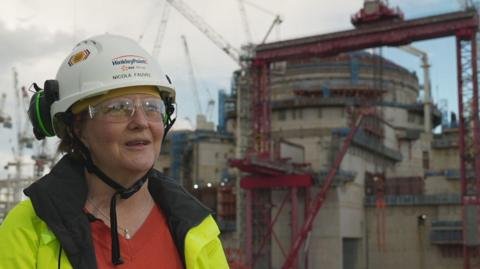
On the north Somerset coast, construction of Hinkley Point C, Europe’s largest building site, is underway, signifying the first nuclear power plant built in the UK in 30 years. This ambitious project, costing around £48 billion, represents a significant investment from EDF, the French state energy company, and is expected to produce baseload power, essential for meeting energy demands.
Hinkley C not only reflects the UK’s nuclear renaissance but has also ignited a political divide in Scotland’s energy strategy, particularly with the upcoming Scottish Parliament elections. The SNP government opposes new nuclear developments, blaming the focus on renewable energy instead. UK Energy Minister Michael Shanks argues that this stance hinders job opportunities for Scotland, where thousands could be employed in nuclear energy, currently with 98,000 workers across the UK. In contrast, Scottish Energy Secretary Gillian Martin insists the government prioritizes renewables based on public preference.
Nicola Fauvel, the Hinkley C station director and one of the few female leaders in the nuclear sector, reflects on her professional journey and the nuclear industry’s revival in the UK. Many Scots have traveled south for employment at Hinkley due to the lack of nuclear opportunities in Scotland, highlighting the industry’s past prominence and current decline there, especially with significant facilities like Hunterston being decommissioned.
The article traces the historical context of nuclear energy in Scotland, noting its peak contribution of over 25% to the UK’s electricity in the late ‘90s, and how today’s energy landscape differs drastically due to safety concerns and cost overruns of projects like Hinkley C. There is an ongoing debate regarding nuclear power’s future, with suggestions that smaller, more efficient Small Modular Reactors (SMRs) may be the next step if regulations change.
Critics of nuclear energy cite the high costs and safety risks, referring to past disasters like Fukushima and the long-term issues of radioactive waste disposal. Proponents, however, argue for its role in energy security and carbon-free electricity generation, especially in light of rising energy prices exacerbated by geopolitical tensions.
As voters head to the polls in May, the article underlines the pivotal question of Scotland’s energy future: will the nation embrace a potential nuclear renaissance, or continue down the path of renewables, leaving behind its nuclear legacy?