
Scotland's Financial Tightrope: Could Tax Hikes Be on the Horizon?
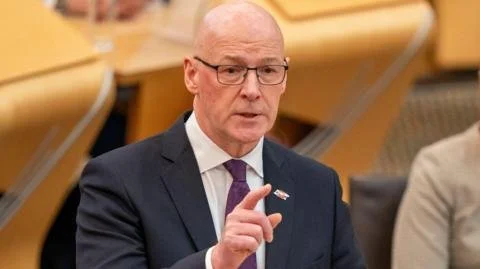
First Minister John Swinney has not dismissed the possibility of tax increases in the upcoming Scottish Budget, as warnings of a potential £1bn funding shortfall loom over his administration. This financial concern arises if the UK government implements income tax hikes in England, Wales, and Northern Ireland, a scenario hinted at by Chancellor Rachel Reeves. Previously, Swinney had asserted he would not raise taxes; however, he now states he is reconsidering in light of the changing political landscape influenced by Westminster.
During an exchange with Scottish Conservative leader Russell Findlay, Swinney dodged a direct promise against raising income, business, or property taxes, stating that the government’s expenditure plans will be revealed during the budget announcement on January 13. He emphasized the Scottish government’s commitment to a more progressive income tax system, which funds free tuition, prescriptions, and other services, but acknowledged that external factors necessitate a reevaluation of tax policies.
The potential shifts in funding have raised alarms among opposition parties. Findlay critiqued any prospective tax hikes as a ”hammer blow” to constituents, arguing that citizens deserve to retain their earnings. In Scotland, earnings below £30,300 incur slightly lower income tax than the rest of the UK, while those earning more face progressively higher rates, which could amount to thousands more than their UK counterparts.
A change in UK tax rates would not directly affect Scottish taxpayers but would influence the block grant that the Scottish government receives from the Treasury. According to estimates from the Fraser of Allander Institute, a 2% increase in UK income tax could result in a £1bn deduction from Scotland’s grant over three years.
Swinney’s current stance contrasts sharply with his prior commitments against raising taxes, revealing a potential crisis in managing the budget and public services amidst pressures from Westminster. His remarks have generated discussion about the risks of undermining the devolved powers in Scotland and the ramifications should the UK government move forward with tax increases elsewhere.