
Unraveling the Tensions: Flags, Football, and the Fight Over Christmas Cards in Northern Ireland's First Executive
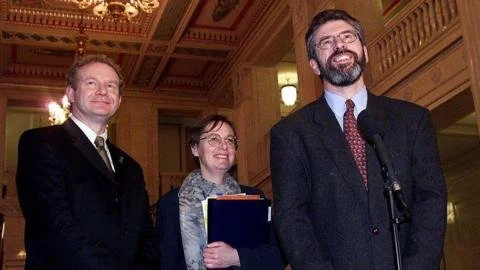
In the aftermath of the Good Friday Agreement, Northern Ireland’s first power-sharing executive was marked by significant tensions over symbols of national identity, particularly regarding the union flag. Newly-released state papers from the Public Record Office of Northern Ireland (PRONI) shed light on the controversy that erupted when Sinn Féin ministers, including Martin McGuinness and Bairbre de Brún, refused to fly the union flag at their departments on Christmas Day in 1999. This refusal infuriated unionist ministers, triggering one of the government formation’s early disputes.
Unionist ministers expressed outrage over this decision, with Sam Foster of the Ulster Unionist Party and Nigel Dodds from the DUP articulating their strong opposition to Sinn Féin’s actions. They demanded adherence to a mandated flag flying schedule, claiming it was a matter of respect for unionist identity. However, officials later confirmed that under the 1998 Northern Ireland Act, the flying of flags was under individual ministerial discretion, thus limiting the applicability of the royal prerogative that governed such practices in Great Britain.
The situation escalated when Peter Mandelson, then Secretary of State, had to intervene by establishing new regulations concerning the flying of the union flag in government buildings while the devolution was temporarily suspended.
Furthermore, the documents reveal a 2002 incident during the FIFA World Cup buildup, where there were concerns over staff wearing football shirts that represented their national teams. The differentiation between aggressive and non-aggressive symbols reflected broader community sensitivities in Northern Ireland.
Another intriguing conflict arose in December 2004 over a Christmas card sent by Sinn Féin’s Kilrea branch to the staff of the Coleraine Social Security Office. Some staff members requested its removal, citing offense, but the office manager refused, asserting it was merely a seasonal greeting from elected representatives—a move justified by legal advice framing it as unacceptable censorship.
Amidst these cultural disputes, the released papers also highlight the administrative challenges faced during the SARS outbreak in Asia, showcasing the government’s readiness for possible health crises. The needs outlined in these plans would foreshadow the more dramatic measures taken in response to COVID-19 nearly two decades later.
Additionally, historical files document efforts from the 1960s regarding census data collection, reflecting the complexities of implementing governmental functions in a politically sensitive environment that was highly influenced by ongoing IRA activities at the time.
These events illustrate the underlying tensions and divisions within Northern Irish society, emphasizing how cultural symbols and government policies highlight the fraught landscape of identity and representation in the nascent executive.