
India's Ambitious Leap into the Semiconductor Industry: Can It Compete?
India is on the verge of transforming its role in the global semiconductor industry, spearheaded by companies like Tejas Networks, which designs essential chips for telecommunications. As technology advances, the reliability and redundancy of chips become paramount, especially in mobile and broadband networks where they must handle massive data volumes. Despite having a significant talent pool, with 20% of the world’s semiconductor engineers in India, there is a critical gap in manufacturing capabilities—a situation laid bare during the COVID-19 pandemic when global supply chains faced unprecedented disruptions.
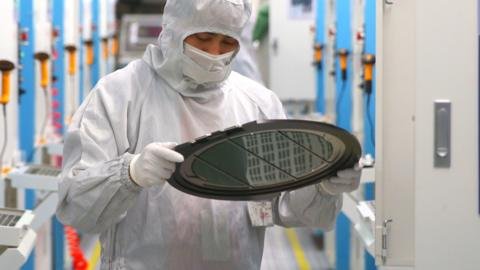
The Indian government is now pushing to develop a local semiconductor ecosystem that strengthens this sector. This includes identifying competitive advantages in various phases of chip production. India already excels in the design phase, but the next hurdle is wafer fabrication, which is currently dominated by companies in Taiwan. India aims to target the Outsourced Semiconductor Assembly and Test (Osat) segment as a crucial stepping stone before venturing into more complex fabrications.
Kaynes Semicon, established in 2023 with government support, is one of the first firms to construct a plant in Gujarat dedicated to assembling and testing chips—a critical part of the manufacturing process. Kaynes focuses on producing chips used in automobiles, telecommunications, and the defense sector rather than the most advanced chips found in the latest smartphones or utilized in artificial intelligence.
The challenges of establishing a semiconductor manufacturing base in India include not only technological hurdles but also the need for a cultural shift in manufacturing disciplines. Training a workforce in this specialized field presents a significant challenge as it takes time to build experience. Industry leaders like Arnob Roy of Tejas Networks are optimistic about locally sourcing technology, expecting that a robust semiconductor industry will emerge in India over the next decade. However, experts caution that patience and ongoing investment in deep-tech products will be critical to the long-term success of India’s semiconductor ambitions.