
**Smoke Alarms: The Evolution of Lifesaving Technology in a Fire-Prone World**
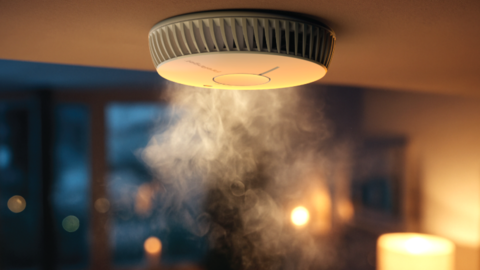
In an alarming incident last September, Liz McConnell’s home caught fire due to a malfunctioning tumble dryer. Thanks to her smoke alarm, she was notified in time to evacuate, emphasizing that these devices are ”absolutely essential” for safety. Despite being around for decades, smoke alarms face modern challenges from rapidly evolving household technology, such as e-bike batteries that can catch fire unexpectedly.
Current smoke alarm technologies can be broadly categorized into two types: ionisation-based and optical-based systems. Ionisation alarms react to charged particles in the air, while optical alarms utilize light to detect larger smoke particles from smoldering fires. Another popular type, heat sensors, are particularly situated in kitchens to prevent false alarms from minor cooking mishaps.
However, many homes remain unprotected from fires due to expired alarms; around 6,500 such instances were found in properties across Kent. Alarmingly, a Direct Line survey indicated that nearly 4 million UK adults live without functional smoke alarms, and in the U.S., approximately 16% of households lack them entirely, significantly increasing the risk of fire-related fatalities.
Recent innovations have emerged to tackle new fire challenges, particularly from lithium-ion batteries found in e-bikes, which can emit flammable gases during failure. To combat this, ultra-sensitive smoke detection systems known as aspirating devices continuously monitor air quality to catch even the slightest whiff of smoke early on. These systems are typically reserved for commercial use and can incur installation costs of £3-4,000.
Among the most noteworthy advancements is the rise of smart smoke alarms, which connect to Wi-Fi and notify users via their smartphones when smoke is detected, even when they are away from home. Companies like FireAngel and Kidde are iteratively improving these smart technologies, offering services like fire monitoring linked to apps, while also aiming to minimize nuisance alarms that risk user disengagement.
Looking ahead, researchers are exploring AI-based solutions using video feeds for fire detection. This technology could leverage drones to help locate fires in hard-to-access areas, potentially revolutionizing firefighting and home safety standards. In summary, while traditional smoke alarms continue to save lives, ongoing innovation is essential to keep up with modern fire risks and enhance safety in both residential and commercial settings.