
Will Spain's Green Revolution Stall? Insights from Figueruelas' Energy Transition
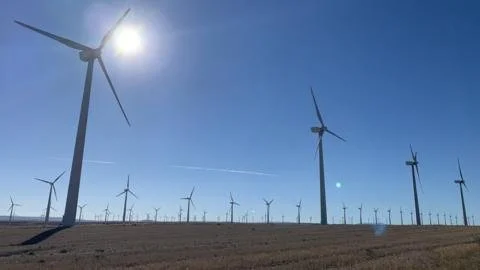
In the quiet town of Figueruelas, Aragón emerges as a critical player in Spain’s renewable energy landscape, symbolized by a towering wind turbine producing clean electricity. This shows that Spain is not just chasing dreams but is making substantial investments in renewable energy, with a significant new factory being constructed to manufacture batteries for electric vehicles. The €4 billion investment from Chinese company CATL and Stellantis underlines Spain’s commitment to transitioning towards a greener future.
As of now, renewables have surged from just 33% of the country’s electricity production in 2017 to a remarkable 57% last year, with ambitions to reach 81% by 2030. Prime Minister Pedro Sánchez’s declaration of “Green, baby, green” signifies a robust endorsement of this transition. However, recent challenges raise questions about the sustainability of Spain’s commitment to renewables.
The blackout on April 28 that impacted millions across Spain and Portugal sent shockwaves through the political landscape, leading to fierce debates about the reliability of Spain’s energy mix. Opposing party leaders skeptically labeled the government’s green approach as fanaticism, connecting the blackout to its over-reliance on renewable energy sources. Despite the skepticism, authorities like Red Eléctrica denied that the increase in renewables was the cause of the blackout, attributing it instead to other complications within the energy system.
Moreover, the Spanish nuclear industry, contributing about 20% of electricity, is increasingly vocal against plans to close multiple nuclear plants by 2035. While other European nations embrace nuclear energy, Spain’s planned closures put it at odds, raising fears of reduced energy stability. Ignacio Araluce, representing the nuclear sector, advocates for a balanced energy mix, emphasizing nuclear as a reliable complement to renewables.
Adding to this complexity is the political instability within Spain, with corruption scandals swirling around the current government and elections looming. A shift towards a right-wing government could see a retreat from renewable ambitions, reigniting reliance on traditional energy sources.
In Figueruelas, the ongoing transition is not just about energy but also economic revitalization, with significant job creation on the horizon, bolstered by local resources like sun and wind. Manuel Martín, a local citizen, highlights the burgeoning construction and hospitality industries as signs of growth brought by renewable investments. As Spain continues its green journey, Figueruelas stands at the forefront, facing both remarkable opportunities and daunting challenges.