
From Welcome to Regret: Starmer's Controversial Embrace of Activist Amid 'Abhorrent' Social Media Posts
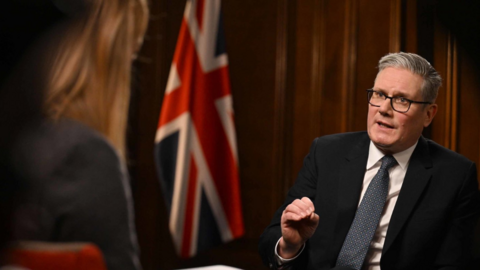
Prime Minister Sir Keir Starmer has expressed regret over his earlier decision to welcome British-Egyptian activist Alaa Abd El Fattah to the UK after disturbing social media posts emerged. In an interview with the BBC’s Sunday with Laura Kuenssberg, Starmer labeled the posts as ”abhorrent”, indicating that he was unaware of their existence before extending his welcome to Abd El Fattah, who had recently been released from an Egyptian prison.
Calls for Abd El Fattah to be stripped of his British citizenship have come from various political factions, including the Conservatives and certain Labour MPs, sparking debates about the government’s due diligence in vetting. Reflecting on the situation, Starmer admitted it was a ”failing in the system” and pointed out that the case was treated as a ”consular case”, acknowledging that prior administrations had similarly advocated for his release, unaware of his controversial statements.
Alaa Abd El Fattah, known for his opposition to the Egyptian regime, had been detained for 12 years, with his latest conviction stemming from a Facebook post about torture. His recent welcome to the UK came after a campaign by his family and support from high-profile figures like actors Judi Dench and Olivia Colman.
However, upon arrival, offensive posts from 2012 resurfaced, where Abd El Fattah made extreme statements regarding Zionists and police, claiming to consider the killing of colonialists as ”heroic”. Organizations such as the Board of Deputies of British Jews raised alarms over his past rhetoric, deeming the government’s oversight as an astonishing lack of diligence.
In light of the backlash, Shadow Justice Secretary Robert Jenrick argued that Abd El Fattah’s views are incompatible with British values, while Reform UK leader Nigel Farage suggested legislation to strip him of citizenship. Abd El Fattah offered an ”unequivocal” apology, attributing his earlier statements to youthful anger, yet his recent activity on social media continued to fuel criticism. Stripping citizenship is typically reserved for severe national security threats, raising questions about the implications of this case.