
Promises to Progress: How Keir Starmer's Government Tackles Change Amidst Challenges
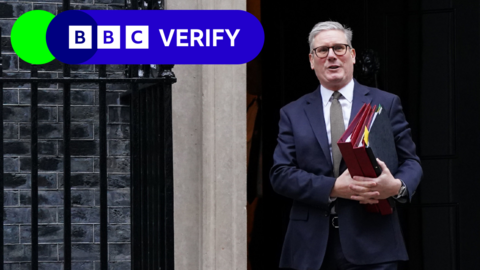
In December 2024, Prime Minister Keir Starmer unveiled his government’s ambitious ”plan for change”, setting forth key targets in areas such as housing, healthcare, crime, and living standards. His focus was on establishing ”measurable milestones” that would allow the public to hold his government accountable for progress.
Starmer aimed to build 1.5 million safe and decent homes in England by 2029, averaging about 300,000 new homes annually. However, the current rate of over 200,000 homes built each year falls short of expectations. Critics point out that this pace is actually slower than the final years of the previous Conservative government, raising questions about the feasibility of reaching the set target. Progress can be tracked through BBC Verify’s housebuilding tracker, which reports new homes receiving Energy Performance Certificates quarterly.
On the healthcare front, Starmer has pledged that 92% of patients will be seen within 18 weeks by the end of his term. Recent data shows a modest increase in adherence to this standard, with 61.7% of patients seen within that timeframe as of October 2025, up from 58.8% when Labour first took office. However, the target has not been met since 2015, indicating significant challenges ahead.
Economic commitments include raising living standards across the UK. The government aims for real household disposable income (RHDI) to grow, albeit at an estimated 0.5% a year, which would be severely low compared to historical growth rates. Meanwhile, the GDP per head is projected to rise by 1% in 2025. Both metrics will be monitored and reported quarterly.
Regarding crime, Starmer’s government has promised to increase neighborhood policing with 13,000 additional officers and community support roles. Currently, just 17,175 officers are assigned to these roles—a modest increase of 1.3% from the previous year. These figures will be updated semi-annually starting January 2026.
In education, the goal is for 75% of five-year-olds to be ”ready to learn” when starting school, as assessed by their development in key social and academic areas. Currently, 68.3% meet this criteria, reflecting only slight progress from the previous year’s 67.7%.
Finally, in energy, the government aims for at least 95% of electricity to come from clean sources by 2030—a step back from a previous goal of zero-carbon electricity. Clean energy currently accounts for 73.8% of generation, a figure that will be periodically updated.
Overall, while there are some signs of progress across various pledges, the government’s ability to effectively deliver on these commitments remains uncertain, as many targets appear challenging to achieve. Keep an eye on BBC Verify for timely updates and advancements as the government navigates these complex issues.