
Silent Partners in Power: How Putin Manages Russia's Billionaires Amidst War
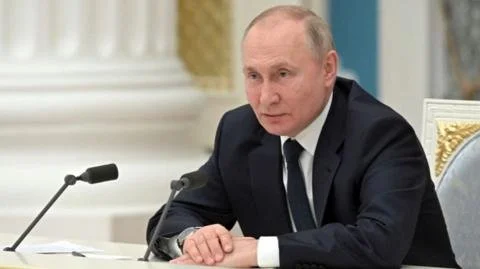
In the midst of war and sanctions, Vladimir Putin has kept a tight grip on Russia’s billionaires, also known as oligarchs, who have lost their political influence yet thrived economically. Following the invasion of Ukraine in February 2022, the number of billionaires in Russia reached an all-time high of 140, nearly matched their combined wealth of $580 billion from the previous year. Despite initial losses due to sanctions and economic decline, oligarchs have found financial benefits in the ongoing conflict.
Prominent figures like Oleg Tinkov, once an influential billionaire, faced dire consequences after criticizing the war. The Kremlin’s threats led to his bank’s near nationalization, resulting in a massive financial blow and his eventual departure from Russia. Tinkov describes his experience as being held hostage, emphasizing how dissent is met with immediate and severe repercussions.
Historically, the oligarchs rose to power post-Soviet Union, accumulating wealth and influence during politically turbulent times. However, after Putin’s rise, oligarchs lost much of their political sway, as evidenced by Boris Berezovsky’s downfall, who later regretted aiding Putin’s ascent.
At a meeting post-invasion, the oligarchs appeared visibly shaken; yet, they had little recourse against the state. Between 2021 and mid-2022, the oligarch count dwindled under sanctions, costing them cumulatively $263 billion due to plummeting fortunes. Yet, Putin’s war economy fostered growth, leading to oligarchs profiting from defense contracts and military supplies.
Western sanctions aimed at crippling their finances have instead reinforced loyalty among Russia’s mega-rich. Rather than leading to dissent, these measures have inadvertently solidified their support for the Kremlin. Many billionaires now operate under a regime where their wealth is tied to Putin’s military ambitions, limiting their options in the West due to frozen assets and lost opportunities after the exodus of foreign companies.
The Kremlin effectively filled the power vacuum left by departing businesses, allowing compliant local elites to acquire valuable assets. With the emergence of 11 new billionaires in 2024 alone, the trend of opportunism during crises continues.
Putin has maintained control over the nation’s wealth, illustrating that even in the face of sanctions and warfare, loyalty is rewarded while dissent is not just punished, but eradicated. This dynamic ensures that Russia’s billionaires remain key players in supporting and propagating the state’s war efforts.