
Tariff Tensions: Starmer Confronts Trump Over Greenland Takeover Threat
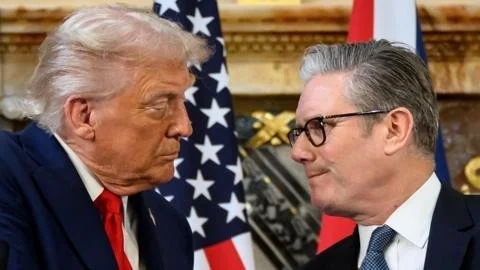
In a tense phone call this Sunday, Sir Keir Starmer addressed President Donald Trump regarding the latter’s proposal to impose a 10% tariff on goods imported from eight European nations, including the UK, in response to the Trump administration’s interest in purchasing Greenland. This marks the first direct conversation between the two leaders since Trump threatened tariffs until a deal over the acquisition of the autonomous Danish territory is reached.
Starmer firmly asserted that applying tariffs on NATO allies for pursuing collective security interests is ”wrong”, emphasizing that the future of Greenland must ultimately be decided by its own people and the people of Denmark. Shortly after the call, a No 10 spokesperson reiterated the UK’s concern for security in the high north, reinforcing the notion that the situation jeopardizes transatlantic relationships.
Denmark has strongly responded to the US interest in Greenland, categorically stating that the island is not for sale and warning that any attack on its territory could signal the end of the NATO alliance. Greenland itself indicated a preference to remain Danish rather than become American. The eight countries affected by Trump’s tariff proposal—Denmark, Finland, France, Germany, the Netherlands, Norway, Sweden, and the UK—publicly expressed their solidarity with Denmark, cautioning that tariffs could lead to a dangerous downward spiral in international relations.
Throughout the international fallout, various UK officials have voiced their opposition to Trump’s tariff threats. Culture Secretary Lisa Nandy labeled them as “deeply unhelpful and counterproductive,” calling for an “adult debate” with the White House. Starmer’s comments represent a rare public rebuke of Trump, as he has otherwise maintained a positive relationship with the US president.
Furthermore, concerns raised by Trump about Denmark’s ability to defend Greenland from threats posed by nations like Russia and China have fueled speculation about his administration’s determination to exert control over the island, with some members of the US government implying that military action could be considered.
Criticism of Trump’s approach has emerged across the British political spectrum, with several MPs echoing Starmer’s concerns and stressing the importance of diplomatic dialogues over tariffs and territorial assertions. The discussion has prompted increased military cooperation among European nations, with the UK deploying military personnel to Greenland as part of an international reconnaissance mission.
As tensions rise, the strategic significance of Greenland, including its potential natural resources, has garnered increased attention, especially as the impacts of climate change make them more accessible. The collective European response to Trump’s tariff threats underscores a commitment to uphold sovereignty and enhance cooperation in Arctic security, positioning the situation as a pivotal moment for NATO alliances and international diplomacy.